
 Start


 Play

How to Get a Japanese Driving License — and Pass the Written Test in English
Getting a Japanese driving license as a foreigner can feel daunting — but the written (theory) test can be taken in English, and with the right practice it's very passable. This guide walks you through the whole process: the license types, the Karimen (仮免) and Honmen (本免) stages, and the Moped (Gentsuki) test. It also explains how the written test works, and how to convert a foreign license (外免切替, gaimen kirikae) — so you know exactly what's ahead.
Types of driving licenses in Japan
In Japan, there are several types of driving licenses that you can obtain, depending on your qualifications and driving experience. The types of licenses include:
- Ordinary Vehicle Class 1 (一般車第一種): This is for vehicles with up to 9 passengers. It's the most common type of license and covers most cars that people drive for personal use.
- Ordinary Vehicle Class 2 (一般車第二種): This license is for vehicles with 10 or more passengers. It's generally used for bus drivers.
- Motorcycle: There are a few options depends on the engine size.
- Gentsuki (原付) - Moped License: This license allows you to operate mopeds or scooters with an engine displacement of up to 50cc.
- And a few more...
If you're considering getting a Japanese driving license, it's essential to understand the process and what it entails. Officially, there are four tests involved in obtaining a Japanese driving license, divided into two stages: the Karimen (仮免) or provisional license, and the Honmen (本免) or actual license.
Gentsuki (原付) - Moped License
In addition to cars and motorcycles, there's the Gentsuki or moped license. Mopeds are a popular choice in Japan, especially in urban areas, due to their convenience and ability to navigate through traffic with ease.
Eligibility
To apply for the Gentsuki license, you must be at least 16 years old. If you already have an Ordinary Vehicle or Motorcycle license, you're not required to take the Gentsuki practical test.
Theory Test
The written test for the Gentsuki license is shorter than for other vehicle categories. It has 46 true-or-false questions and 2 illustration questions, worth 50 points in total. You need at least 45 points to pass, and you have 30 minutes.
Practical Test
The Gentsuki practical test focuses on basic driving skills. The test route is relatively short, including basic maneuvers such as turning, stopping, and starting. Emphasis is placed on safety, so make sure to follow all traffic rules during the test.
Benefits of Gentsuki License
Obtaining a Gentsuki license is often quicker and less rigorous compared to other licenses. For those living in Japan temporarily or in densely populated areas, a moped might be all you need to get around efficiently.
Karimen (仮免) - Provisional License
The first stage in obtaining a Japanese driving license is the Karimen, which translates to "Provisional or Learner's Permit." This stage allows you to learn and practice driving on public roads. It involves both theory and practical exams.
Theory Test
At driving schools, the theory and practical tests are often conducted on the same day. The theory test consists of 50 true-or-false questions, where you need to score at least 45 correct answers to pass.
Practical Test
The practical test is divided into groups of three, and you'll take turns driving a designated course. You start with 100 points and receive penalties for each mistake, with 90 points needed to pass. Critical mistakes, such as running a red light, result in disqualification.
Honmen (本免) - Actual License
Once you obtain your learner's permit (Karimen), you enter the second stage of the process, the Honmen, leading to your actual driver's license. This stage includes additional theory classes and more driving lessons on public roads.
Practical Test
The final day at the school includes a detailed explanation of the practical exam, including the specific route and parking scenarios. You will be tested on various driving skills and maneuvers.
The Written (Theory) Test for the Full License
The theory test for the actual license is more comprehensive and challenging than the one for the learner's permit. It includes 90 true-or-false questions and five danger prediction questions, where you need to score at least 90 out of 100 points to pass.
Taking Lessons at a Japanese Driving School
When embarking on the journey to obtain a Japanese driver's license, you will likely enroll in an official driving school. The process of learning to drive in Japan is structured and consists of several key components.
Enrollment and Orientation
Enrollment involves completing the necessary forms and paying for the course. The school provides you with textbooks, a workbook, and a personal folder to keep track of your progress. An orientation class is held to explain the curriculum and emphasize punctuality.
An interesting part of the orientation is the aptitude test, which evaluates your personality and motor skills. While the results don't impact your ability to obtain a license, they provide insights into your potential driving behavior and areas to be cautious about.
Theory Lessons (学科教習)
Theory lessons take place in regular classrooms, and teachers cover a lot of material in a short time. They often use slideshows and videos to reinforce the key points. To prepare for exams, students can complete homework in workbooks and take mock tests on the school's website.
Practical Lessons (技能教習)
Practical lessons are the heart of your driving education. They help you develop essential driving skills and techniques. In stage one, all practical lessons take place within the school's grounds, as you need a learner's permit to drive on public roads.
Stage one focuses on specific driving skills required for obtaining your learner's permit, including S-curves and crank maneuvers. Manual transmission learners may require additional lessons, adding to the cost of the course.
In stage two, practical lessons move to public roads, allowing you to experience real-world driving scenarios. You'll learn essential skills such as reverse and parallel parking. Similar to stage one, stage two also includes mock exams for both written and driving tests, preparing you for the final exams.
Driving Instructors
Throughout the practical lessons, you'll develop essential skills for both stage one and stage two of your training. Stage one culminates in the driving test for your learner's permit, which takes place on the same day as the written test. Passing both tests means you'll receive your learner's permit.
Stage two focuses on refining your driving abilities on public roads and includes lessons on reverse and parallel parking. At the end of stage two, you'll be ready to take the final driving test at the Driver's License Center.
The Day You Get Your Driver’s License
The final step is taking the theory exam at the Driver’s License Center. You can choose between morning and afternoon exams, with no reservations required. The test is computer-graded, and results are available quickly. If you pass, you can get your license on the same day.
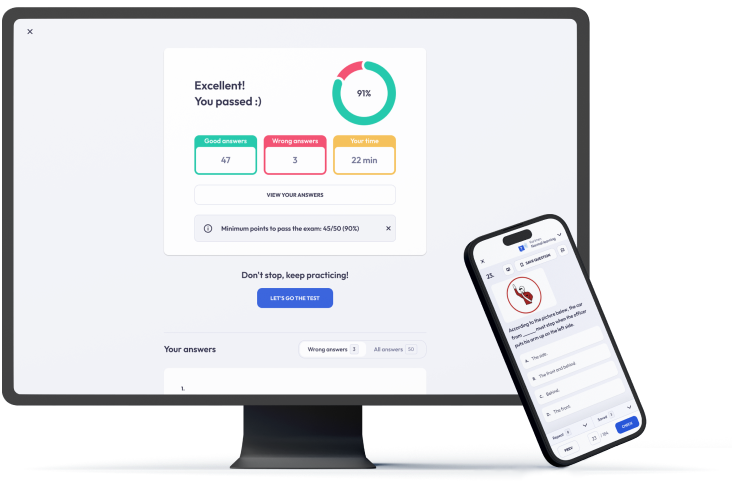
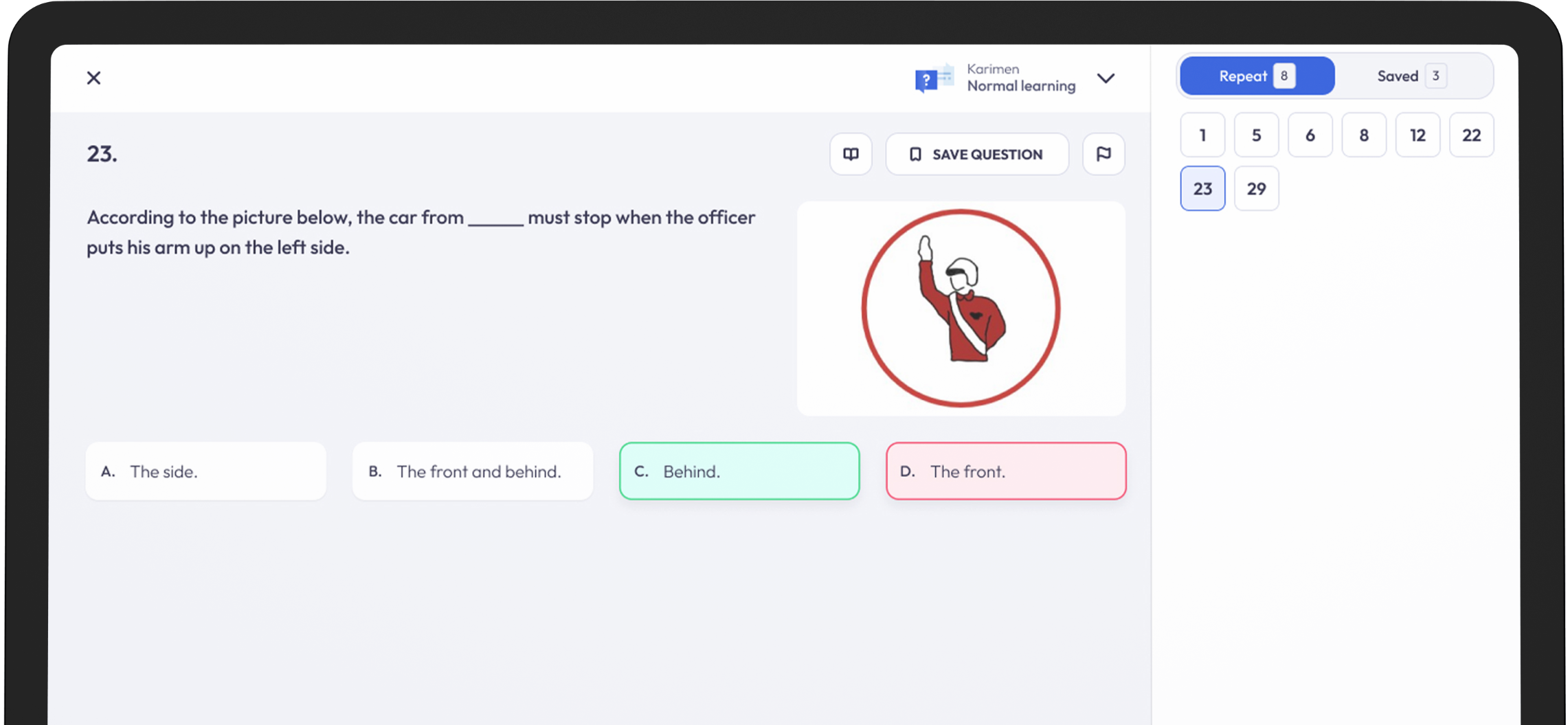
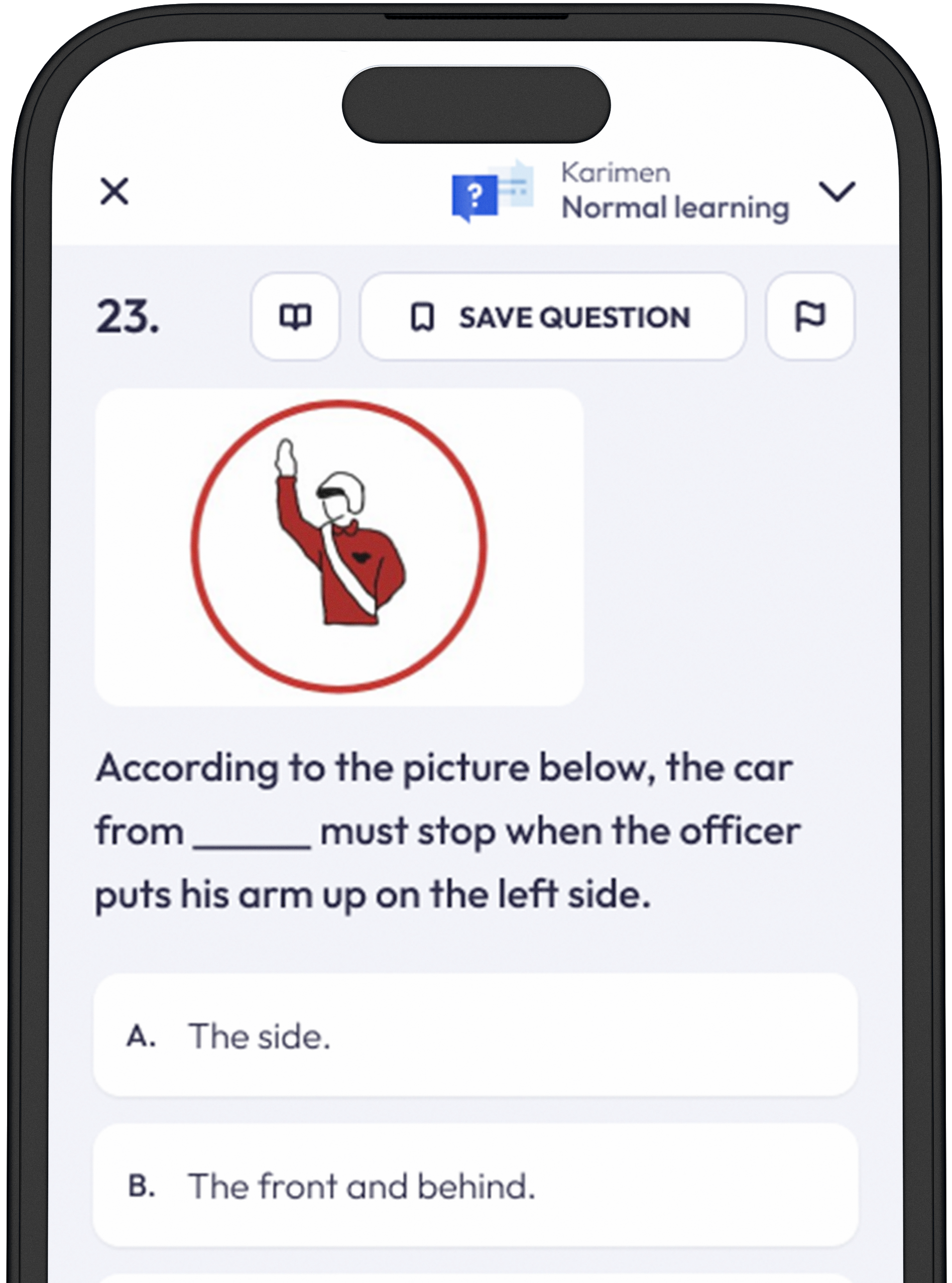
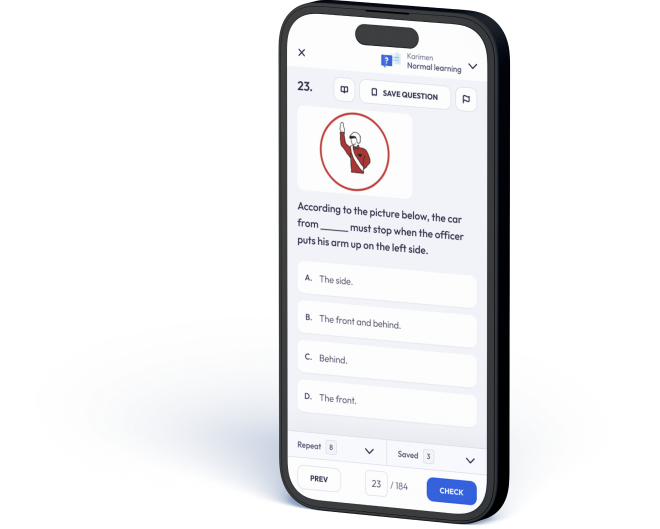
This app helps you prepare for Japan's written driving test entirely in English — no Japanese required. Instead of spending hours reading books and memorizing rules, you practice with 2,000+ questions, each with a clear explanation. It covers every part of the test — Karimen (仮免), Honmen (本免), Moped/Gentsuki (原付), license conversion and the hazard-prediction questions — with a normal study mode, mock tests that use the real pass marks and time limits, and a Mistakes list that automatically collects every question you get wrong so you can drill your weak spots. It works offline, so you can study anywhere.
If you would like to understand the rules more deeply, the Japan Automobile Federation (JAF) publishes an English-language guidebook called “Rules of the Road,” which explains Japanese traffic regulations in plain English (it is also available in Chinese, Portuguese, and Spanish). It is not official exam material, but it can be a helpful companion if you want the reasoning behind the rules — though for passing the written test, practicing the questions here is more than enough.
Common questions about the Japanese driving test (in English)
Can I take the Japanese driving test in English?
Yes. The written (theory) test is offered in English at many driver's license centers in Japan, so you don't need to read Japanese to pass it. (The practical test is driven on a course, not written.) This app is fully in English, so you practice in the same language you'll be tested in.
What is the difference between Karimen (仮免) and Honmen (本免)?
Karimen (仮免) is the provisional / learner's permit — the first stage, with a 50-question written test (pass mark 45/50). Honmen (本免) is the full license — the second stage, with a 100-point written test (pass mark 90/100) that also includes hazard-prediction questions.
What are the pass marks for the written test?
Karimen: 45 out of 50. Honmen: 90 out of 100 (including five hazard-prediction questions). Moped (Gentsuki): 45 out of 50. License conversion: 45 out of 50. The app's mock tests use these same pass marks and time limits, so test day feels familiar. For license conversion, use the General mock test.
Do foreigners need to take the written test, or can I convert a foreign license?
If you have a foreign license, you can usually convert it to a Japanese one. This is called license conversion (外免切替, gaimen kirikae).
- You must live in Japan and have a residence record (住民票). Tourists and other short-stay visitors cannot convert.
- After getting your license, you must have spent at least 3 months in total in the country that issued it.
- Licenses from 29 countries and regions, such as the UK, Germany, Australia and South Korea, skip the written and driving tests.
- Most other licenses need two tests: a written test, then a short driving test on a course.
- Since October 2025, the written test has 50 questions in 30 minutes, with no picture questions. You need 45 correct to pass.
- Many prefectures offer the written test in English.
If you cannot convert, you get a license the normal way: at a driving school, or by taking the tests directly. Both ways include the Karimen and Honmen written tests. To start a conversion, or to check what applies to you, contact your prefecture's driver's license center. The National Police Agency has English information on Japanese driver's licenses (npa.go.jp).
Is there a practice test for the license conversion (gaimen kirikae) written test in English?
Yes. Use the General mock test in this app. It has the same length, time limit and pass mark as the real test: 50 questions, 30 minutes, 45 to pass. Every question has an explanation, so you learn the rule, not just the answer.
Does the app cover the Moped (Gentsuki) and hazard-prediction questions?
Yes. Alongside Karimen, Honmen and a General set, it includes a Moped (Gentsuki, 原付) deck and a dedicated Hazard prediction deck — each question with its own explanation.
I wish you luck and hope you will be able to get your driving license easily in Japan!